
Lithium battery charging and protection integrated circuit board with 5V input voltage, 4.2V charging cut-off, 1000mA maximum charging current, 2.5V over-discharge protection, and 3A overcurrent protection in blue PCB measuring 26mm by 17mm


Lithium battery charging and protection integrated circuit board with 5V input voltage, 4.2V charging cut-off, 1000mA maximum charging current, 2.5V over-discharge protection, and 3A overcurrent protection in blue PCB measuring 26mm by 17mm
Integrated Lithium Battery Charging and Protection Board with 5V Input and 3A Protection

This all-in-one circuit board simplifies power management for single-cell lithium batteries, merging a regulated charger and essential safety circuitry onto a single, compact unit. Designed for integration into DIY projects, prototypes, or electronic products, it provides a reliable and space-efficient solution. The board accepts a ubiquitous 5V DC input—compatible with many USB power sources and adaptors—and manages the complete charge cycle up to a precise 4.2V termination. Its built-in protection features actively guard the connected battery against the common hazards of over-discharge and excessive current draw, offering a foundational level of battery care and system safety.
Technical Specifications and Circuit Protection
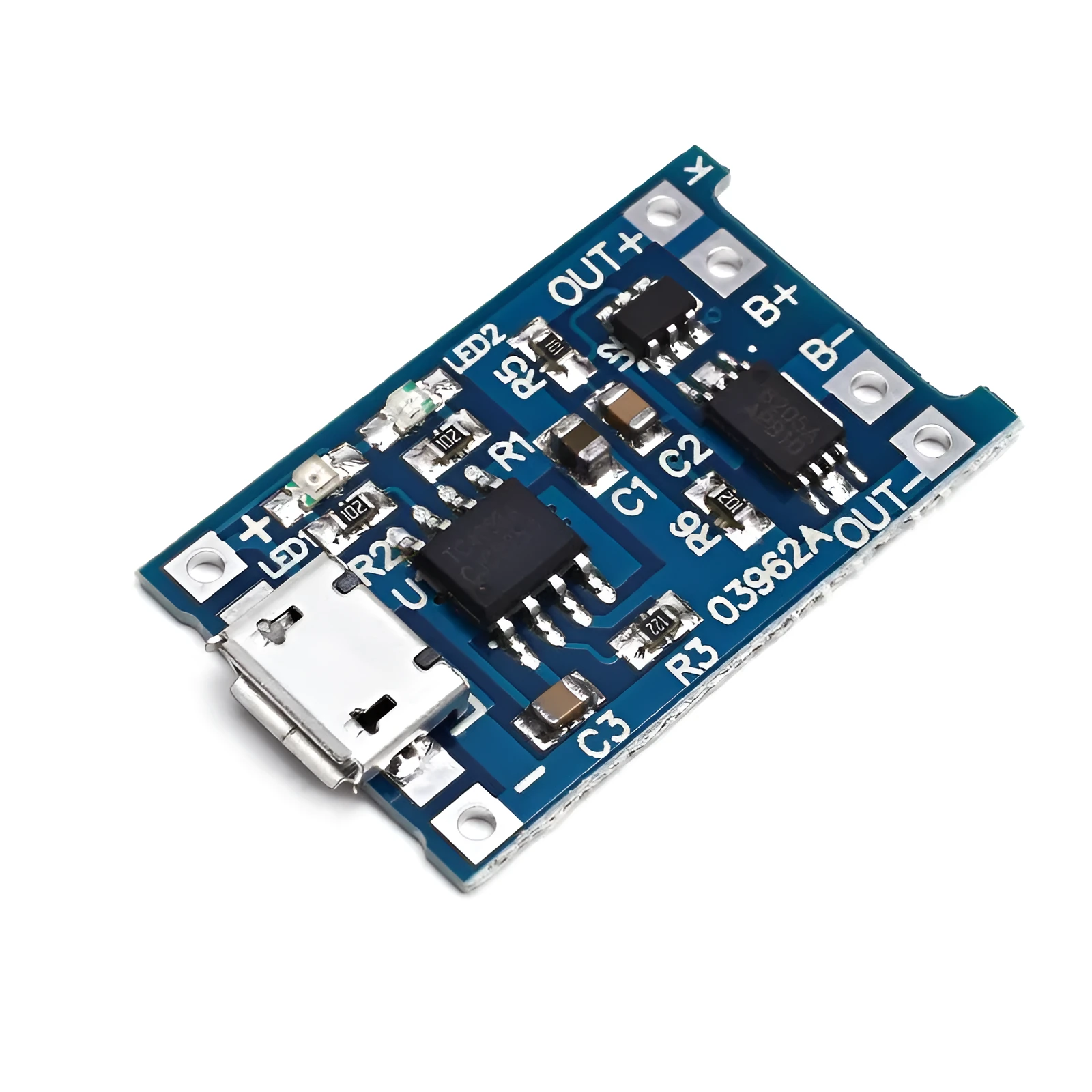
The board's operation is defined by several key electrical parameters that determine its charging profile and protective responses. These specifications provide the necessary details for engineers and makers to correctly implement the board within their system's power architecture.
Charging Parameters and Input Voltage
The charger section is configured for a 5V input, making it straightforward to power from standard USB ports, phone chargers, or regulated 5V DC supplies. It delivers a maximum charging current of 1000mA (1 Amp), which dictates the speed at which it can replenish a battery. Charging halts automatically when the battery voltage reaches the programmed cut-off point of 4.2V, with a stated tolerance of ±1% to ensure accurate full-charge detection and help maintain long-term battery health by preventing overcharging.
Battery Protection Voltage and Current Limits
Integrated protection circuitry disconnects the battery from the load if its voltage drops too low, with the protection threshold set at 2.5V. This over-discharge protection helps prevent damage that can occur when a lithium cell is drained excessively. Furthermore, the board includes overcurrent protection that triggers at 3A, safeguarding both the battery and the circuit from potential short circuits or faulty loads that attempt to draw too much current.
Physical Board Dimensions and Colour
The entire circuit is assembled on a blue coloured printed circuit board (PCB). The board's footprint is clearly defined at 26mm by 17mm (2.6cm x 1.7cm), a compact size that facilitates installation in space-constrained applications. This measurement allows users to accurately plan the layout and enclosure design for their projects.
Integration and Application Uses

As a component-level product, this board is intended for integration into a larger electronic system rather than for standalone use. Its design supports a wide range of applications where managed lithium battery power is required, from hobbyist creations to commercial device prototypes.
DIY Electronics and Prototyping
Makers and electronics hobbyists can utilise this board to add safe lithium battery charging and power management to their projects, such as custom handheld devices, robots, or portable sensors. The defined parameters allow for predictable behaviour, while the compact PCB size helps keep projects neat. The 5V input compatibility simplifies power sourcing during both development and end-use.
Product Development and Small-Scale Production
For developers creating battery-powered products, this integrated board can serve as a ready-made power management module, potentially reducing design time and complexity. Its combination of charging and protection in one unit can be advantageous for low-to-medium volume production runs where designing a fully custom circuit is not feasible.
Educational and Repair Applications
The board can also function as an educational tool for learning about lithium battery management principles. Furthermore, it may serve as a replacement or upgrade module in repair scenarios where an existing device's charging or protection circuit has failed, provided the electrical specifications are compatible.
Practical Considerations for Buyers

When selecting this board, it is important to assess its specifications against your project's specific needs. Understanding what the board provides, and what it requires from the user for integration, ensures it will function as intended within the final application.
Matching Specifications to Battery and Load
Ensure the connected lithium battery cell (typically Li-ion or Li-Po) is compatible with a 4.2V full charge voltage. Verify that your application's typical current draw is below the 3A protection threshold to avoid nuisance tripping. The 1000mA charge current is suitable for batteries with a capacity that can safely accept that rate.
Implementation and Required User Input
The board requires the user to handle all physical integration, including soldering connections for power input, battery, and load output. A basic understanding of electronics and safe soldering practice is necessary. No specialist software or configuration is needed, as the board's parameters are fixed by its hardware design.
Value in a Single Integrated Unit
The primary value lies in obtaining both charging regulation and critical battery protection functions from a single, tested component. This integration can save design time, reduce the part count in a Bill of Materials (BOM), and provide a known-good solution for these essential tasks, which can be particularly valuable for those without the expertise to design such circuits from discrete components.