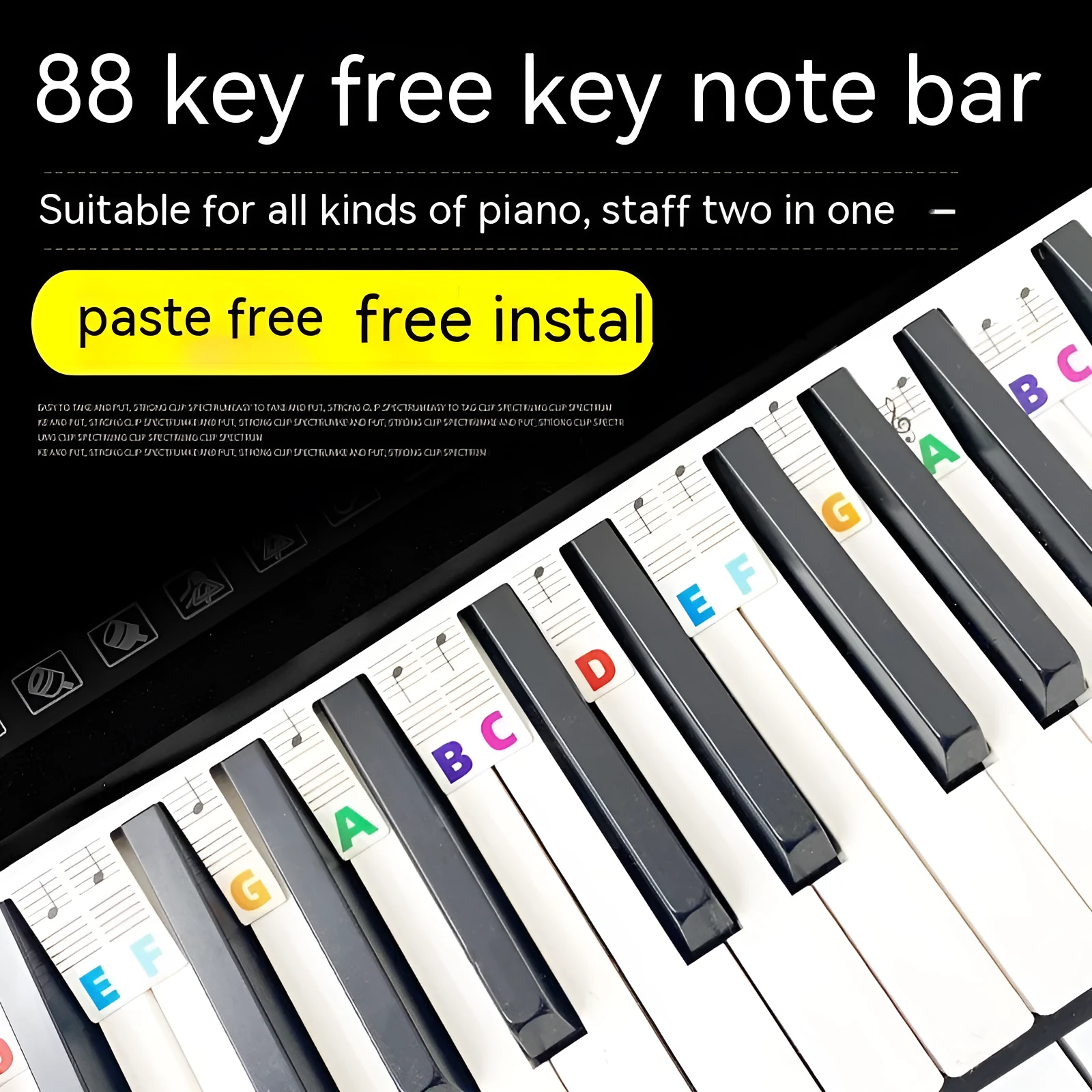
Piano note bar keyboard stickers made from white card with 88 key staff layout for piano keyboard beginners and learners, colour-coded notes with separate black note bag for easy identification on standard 88-key pianos


Piano note bar keyboard stickers made from white card with 88 key staff layout for piano keyboard beginners and learners, colour-coded notes with separate black note bag for easy identification on standard 88-key pianos
White Card Piano Note Bar Stickers for 88-Key Keyboard Learning with Colour-Coded Notes

These piano note bar stickers provide visual learning support for beginners tackling 88-key keyboard instruments. Made from white card material, they create clear markers directly on piano keys that help bridge the gap between sheet music notation and keyboard geography. The colour-coded system separates natural keys from black notes while the staff layout shows musical positions directly where fingers need to go. With two separate bags organising coloured note bars and black notes, application becomes straightforward without mixing different sticker types during keyboard setup.
Features and Construction
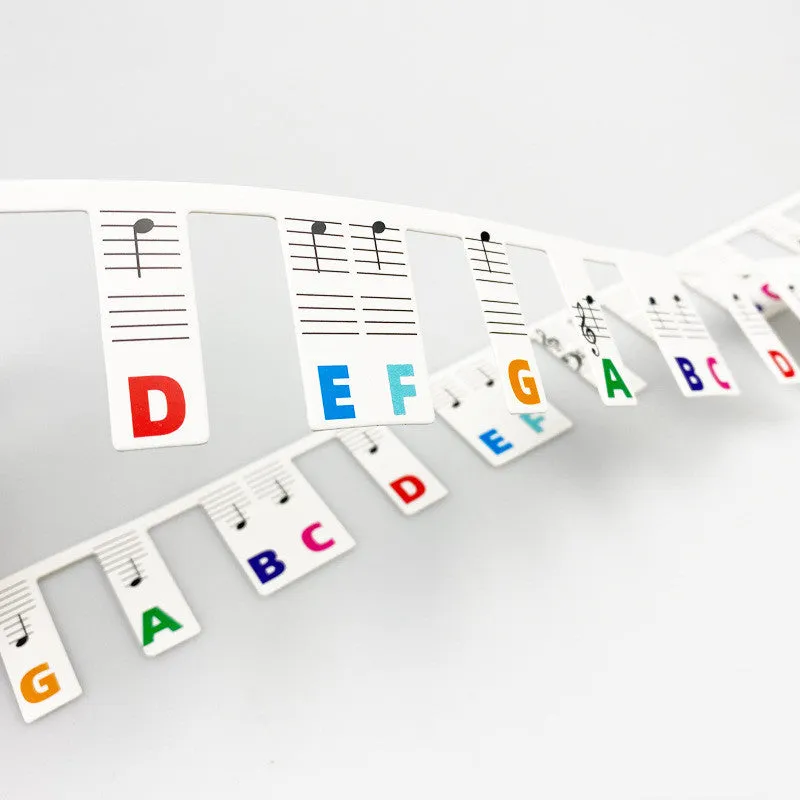
The sticker set covers all 88 keys found on standard piano keyboards, providing comprehensive support across the full musical range. Each element serves a specific learning function while maintaining practical usability during practice sessions.
Material and Build
White cardboard forms the base material for all stickers, offering sufficient opacity to stand out against both dark and light piano keys while remaining thin enough to avoid interfering with playing technique. This material choice balances visibility with practicality, creating markers that guide without becoming physical obstacles during finger movement across the keyboard.
Size and Practical Fit
The 88-key coverage ensures compatibility with standard piano keyboards from various manufacturers, providing learning support across the complete musical range from lowest bass notes to highest treble tones. The separate organisation of colour note bars and black notes in different bags simplifies the application process, allowing users to methodically place each sticker type without confusion about which goes where on the keyboard layout.
Uses and Placement

Designed specifically for keyboard learning environments, these stickers serve multiple educational functions while remaining simple to implement across different teaching approaches and practice routines.
Event or Professional Use
Music teachers and educators can incorporate these stickers into lesson plans to help students visualise keyboard geography during early instruction phases. The colour-coded system reduces cognitive load by separating natural keys from accidentals, allowing learners to focus on hand positioning and note relationships rather than constantly looking between keyboard and sheet music.
Everyday Home Use
For home practice sessions, the stickers provide continuous visual reference that helps build muscle memory and note recognition without requiring external charts or diagrams. The staff layout directly on keys shows musical notation positions, creating a physical connection between written music and keyboard locations that reinforces learning through multiple sensory channels during daily practice routines.
Benefits and Buying Value

This learning tool offers practical advantages for keyboard beginners through straightforward implementation and clear visual communication that supports skill development without complicated setup or maintenance requirements.
Reuse and Low Maintenance
The sticker format provides lasting visual reference throughout the learning process without ongoing adjustments or replacements. Once applied correctly following the colour-coded system, they remain in place through regular practice sessions, offering consistent guidance as skills develop without needing additional purchases or supplementary materials.
Why Choose This Product
These stickers address specific learning challenges faced by keyboard beginners through their 88-key coverage and colour-coded note separation system. The white card material offers visibility without bulk, while the separate bag organisation prevents application errors that could confuse rather than clarify keyboard geography during critical early learning stages.