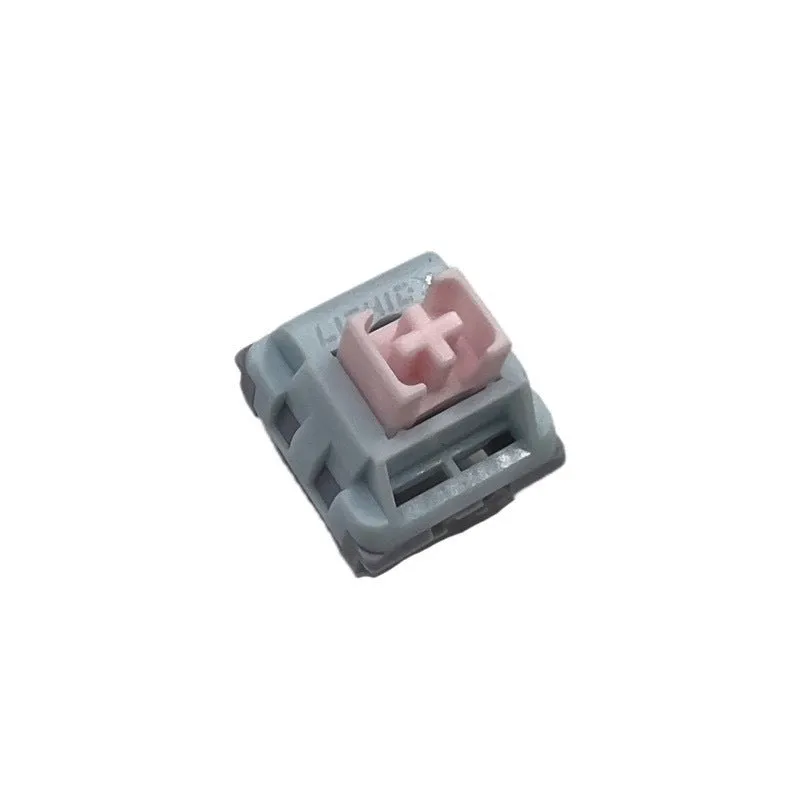
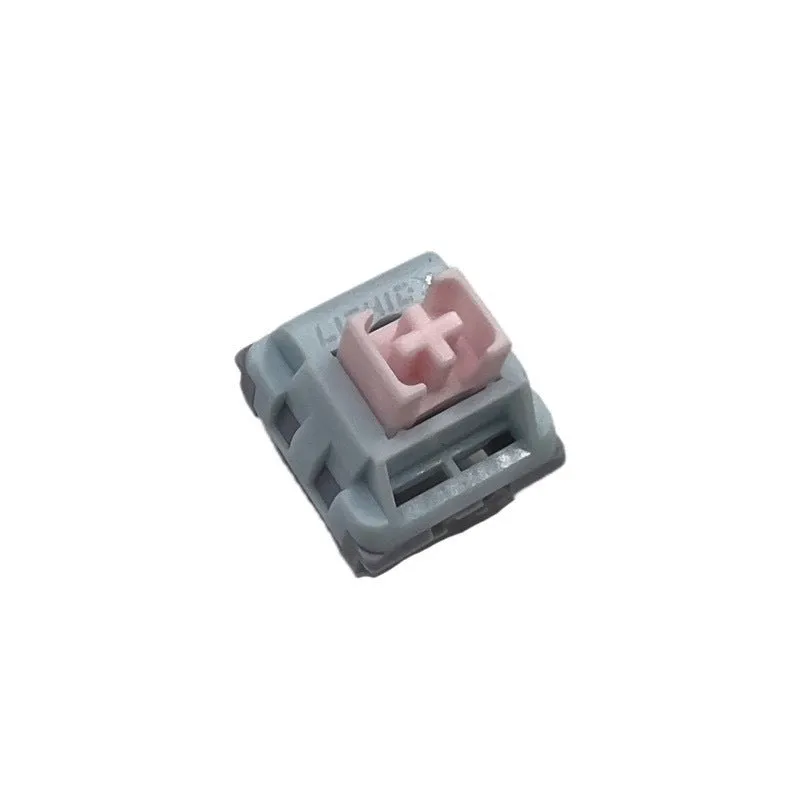
Linear mute mechanical keyboard switch bottom for small window candle cutting shafts, custom Dew Axis-4 colour with special Japanese silencing oil lubrication, featuring a 1.9mm trigger stroke and 38g touch pressure for a quiet typing experience


Linear mute mechanical keyboard switch bottom for small window candle cutting shafts, custom Dew Axis-4 colour with special Japanese silencing oil lubrication, featuring a 1.9mm trigger stroke and 38g touch pressure for a quiet typing experience
Dew Axis-4 linear mute mechanical keyboard switch bottom with Japanese silencing oil and 1.9mm stroke

The Dew Axis-4 represents a customised component for mechanical keyboard enthusiasts seeking a specific linear and silent typing experience. Designed for the 'Candle Cutting' shaft variant, this switch bottom integrates several material and lubrication choices aimed at reducing acoustic noise and providing a consistent press. Its standout feature is the application of a special silencing oil, customised in Japan, which is applied to the bottom of the spring in place of standard grease. This, combined with a precise 16mm single-section spring and a multi-material construction, aims to deliver a quiet, smooth keystroke with defined actuation points of 38g for touch and 55g for bottom-out pressure, catering to typists who prefer a lighter, less audible switch.
Features and Construction
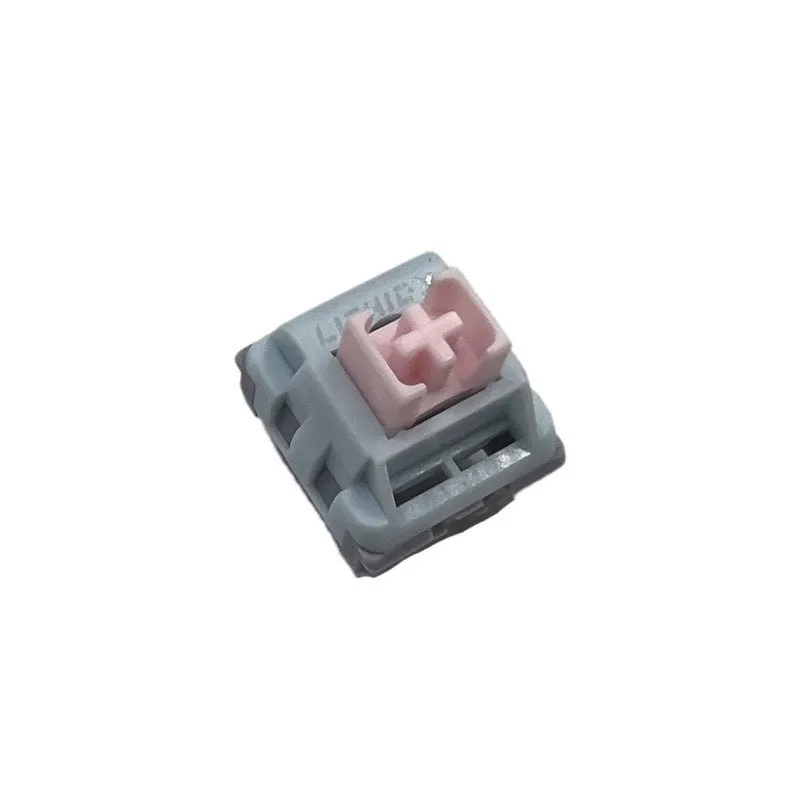
The switch bottom is built from several distinct polymers and composites, each selected for its role in the assembly's function and stability. The design follows a bridge plug-in structure with large buckles on the sides to secure the housing.
Material and Build
The upper cover is manufactured from POK polymer raw materials, chosen for its mechanical properties. The main body of the bottom shell uses PA (Polyamide), which is further modified with a significant amount of GF C5 material—a glass fibre composite—likely to improve rigidity and dimensional stability. The shaft core itself is a three-colour component comprising a POM (Polyoxymethylene) body fused with a custom-formulated soft and silent silicone gel. This gel integration is central to the switch's muted sound profile and tactile dampening.
Size and Practical Fit
This component is designed as a 'bottom of body' part for a specific small window 'Candle Cutting' shaft, indicating it mates with a particular switch top housing. The physical switch measurements are defined by its actuation travel: a trigger stroke of 1.9mm with a tolerance of ±0.3mm and a total bottom-out stroke of 3.7mm ±0.3mm. The external housing structure, with its bridge plug-in design and large buckles, suggests it is engineered for a secure, rattle-free fit within a keyboard's plate and PCB.
Uses and Placement

This product is a specialist component for custom mechanical keyboard builds, where users select individual parts to tailor feel and sound.
Event or Professional Use
In environments where keyboard noise is a distraction, such as open-plan offices, libraries, or streaming setups, switches built with these silent components can be advantageous. The specified Japanese silencing oil and silicone-gel core are directly aimed at minimising the 'clack' of bottoming out and the 'ping' of spring resonance, making them suitable for prolonged typing sessions where noise reduction is valued.
Everyday Home Use
For the home enthusiast or daily typist, these switch bottoms allow for the creation of a personalised keyboard that aligns with a preference for a linear (non-tactile) and quiet keypress. The light 38g actuation force may reduce finger fatigue during long writing or coding sessions. The Dew Axis-4 colour also offers a visual customisation point for themed builds.
Benefits and Buying Value

The value lies in the specific, documented specifications and material choices that enable a targeted typing experience upgrade.
Reuse and Low Maintenance
As a mechanical component, the switch bottom is sold in a pack of four, allowing for the outfitting of multiple keys or spares. The materials used, such as POK, PA+GF, and POM, are generally chosen for durability and resistance to wear in keyboard applications. The lubrication is factory-applied and should not require end-user maintenance under normal use.
Why Choose This Product
Choose this switch bottom if you are building or modifying a mechanical keyboard and require a linear, silent switch with a very specific set of characteristics: Japanese silencing oil, a light 38g touch pressure, a 1.9mm actuation point, and a construction using POK, reinforced PA, and a silicone-gel POM core. It provides concrete, measurable parameters—stroke distance and actuation force—for informed selection, unlike generic silent switches.